


Five-axis machining knowledge encyclopedia
Release time:
2020-12-03
你真的足够了解五轴加工吗?五轴加工知识全解! 近年来五轴联动数控加工中心在各领域得到了越来越广泛的应用。在实际应用中,每当人们碰见异形复杂零件高效、高质量加工难题时,五轴联动技术无疑是解决这类问题的重要手段。越来越多的厂家倾向于寻找五轴设备来满足高效率、高质量的加工。但是,你真的足够了解五轴加工吗? 01五轴机床的机械结构形式 想要真正的了解五轴加工,首先我们要读懂什么是五轴机床。五轴机床(5 Axis Machining),顾名思义,是指在X、Y、Z,三根常见的直线轴上加上两根旋转轴。A、B、C三轴中的两个旋转轴具有不同的运动方式,以满足各类产品的技术需求。 而在5轴加工中心的机械设计上,机床制造商始终坚持不懈地致力于开发出新的运动模式,以满足各种要求。综合目前市场上各类五轴机床,虽然其机械结构形式多种多样,但是主要有以下几种形式: 1. 两个转动坐标直接控制刀具轴线的方向(双摆头形式)。 2. 两个坐标轴在刀具顶端,但是旋转轴不与直线轴垂直(俯垂型摆头式)。 3. 两个转动坐标直接控制空间的旋转(双转台形式)。 4. 两个坐标轴在工作台上,但是旋转轴不与直线轴垂直(俯垂型工作台式)。 5. 两个转动坐标一个作用在刀具上,一个作用在工件上(一摆一转形式)。 *术语:如果旋转轴不与直线轴相垂直,则被认为是一根“俯垂型”轴。 看过这些结构的五轴机床,我相信我们应该明白了五轴机床什么在运动,怎样运动。可是,这么多样化的机床结构,在加工时究竟能展现出哪些特点呢?与传统的三轴机床相比,又有哪些优势呢?接下来就让我们来看看五轴机床有哪些发光点。 五轴加工的众多优点 说起五轴机床的特点,就要和传统的三轴设备来比较。生产中三轴加工设备比较常见,有立式、卧式及龙门等几种形式。常见的加工方法有立铣刀端刃加工、侧刃加工。球头刀的仿形加工等等。但无论哪种形式和方法都有着一个共同的特点,就是在加工过程中刀轴方向始终保持不变,机床只能通过X、Y、Z三个线性轴的插补来实现刀具在空间直角坐标系中的运动。所以,在面对下面这些产品时,三轴机床效率低、加工表面质量差甚至无法加工的弊端就暴露出来了。 与三轴数控加工设备相比,五联动数控机床有以下优点: 1. 保持刀具最佳切削状态,改善切削条件 如上图,在左图中三轴切削方式,当切削刀具向顶端或工件边缘移动时,切削状态逐渐变差。而要在此处也保持最佳切削状态,就需要旋转工作台。而如果我们要完整加工一个不规则平面,就必须将工作台以不同方向旋转多次。可以看见,五轴机床还可以避免球头铣刀中心点线速度为0的情况,获得更好的表面质量。 2. 有效避免刀具干涉 如上图,针对航空航天领域内应用的叶轮、叶片和整体叶盘等零件,三轴设备由于干涉原因无法满足工艺要求。而五轴机床就可以满足。同时五轴机床还可以使用更短的刀具进行加工,提升系统刚性,减少刀具的数量,避免了专用刀具的产生。对于我们的企业老板来说,意味在刀具成本方面,五轴机床将会给您省钱了! 3. 减少装夹次数,一次装夹完成五面加工 如上图可以看出五轴加工中心还可以减少基准转换,提高加工精度。在实际加工中,只需一次装夹,加工精度更容易得到保证。同时五轴加工中心由于过程链的缩短和设备数量的减少,工装夹具数量、车间占地面积和设备维护费用也随之减少。这意味着您可以用更少的夹具,更少的厂房面积和维护费用,来完成更高效更高质量的加工! 如图,五轴机床可以采用刀具侧刃切削,加工效率更高。 5. 缩短生产过程链,简化生产管理 五轴数控机床的完整加工大大缩短了生产过程链,可以使生产管理和计划调度简化。工件越复杂,它相对传统工序分散的生产方法的优势就越明显。 6. 缩短新产品研发周期 对于航空航天、汽车等领域的企业,有的新产品零件及成型模具形状很复杂,精度要求也很高,因此具备高柔性、高精度、高集成性和完整加工能力的五轴数控加工中心可以很好地解决新产品研发过程中复杂零件加工的精度和周期问题,大大缩短研发周期和提高新产品的成功率。 综上所述,五轴机床实在是有太多太多优点,但是五轴机床刀具姿态控制,数控系统,CAM编程和后处理都要比三轴机床复杂的多!同时,我们说到五轴机床,就不得不说真假五轴的问题,我们都知道真假五轴最大的区别在于RTCP功能,然而何谓RTCP,它是怎么产生的又该如何应用?下面我们就结合机床结构和编程后处理来具体了解一下RTCP,了解他的真正面目。 03关于RTCP RTCP,在高档五轴数控系统里,认为RTCP即是Rotated Tool Center Point,也就是我们常说的刀尖点跟随功能。在五轴加工中,追求刀尖点轨迹及刀具与工件间的姿态时,由于回转运动,产生刀尖点的附加运动。数控系统控制点往往与刀尖点不重合,因此数控系统要自动修正控制点,以保证刀尖点按指令既定轨迹运动。业内也有将此技术称为TCPM、TCPC或者RPCP等功能。其实这些称呼的功能定义都与RTCP类似,严格意义上来说,RTCP功能是用在双摆头结构上,是应用摆头旋转中心点来进行补偿。而类似于RPCP功能主要是应用在双转台形式的机床上,补偿的是由于工件旋转所造成的的直线轴坐标的变化。其实这些功能殊途同归,都是为了保持刀具中心点和刀具与工件表面的实际接触点不变。所以为了表述方便,本文统一此类技术为RTCP技术。 那么RTCP功能是怎么产生的呢?多年以前,在五轴机床刚普及市场的时候,RTCP概念被机床厂家大肆宣传。彼时RTCP功能更像是为技术而技术的噱头,更多人是对其技术本身的热衷和炒作。其实RTCP功能正好相反,它不光是一项好技术,更是一项能为客户带来效益和创造价值的好技术。拥有RTCP技术的机床(也就是国内所说的真五轴机床),操作工不必把工件精确的和转台轴心线对齐,随便装夹,机床自动补偿偏移,大大减少辅助时间,同时提高加工精度。同时后处理制作简单,只要输出刀尖点坐标和矢量就行了。像我们之前说的那样,在机械结构上,五轴数控机床主要有双摆头、双转台、一摆一转等结构。 下文我们将以双转台高档五轴数控系统为例,详细介绍一下RTCP功能。 在五轴机床中定义第四轴和第五轴的概念:在双回转工作台结构中第四轴的转动影响到第五轴的姿态,第五轴的转动无法影响第四轴的姿态。第五轴为在第四轴上的回转坐标。 好了,看完定义说明我们来解释一下。如上图所示,机床第4轴为A轴,第5轴为C轴。工件摆放在C轴转台上。当第4轴A轴旋转时,因为C轴安装在A轴上,所以C轴姿态也会受到影响。同理,对于我们放在转台上面的工件,如果我们对刀具中心切削编程的话,转动坐标的变化势必会导致直线轴X、Y、Z坐标的变化,产生一个相对的位移。而为了消除这一段位移,势必机床要对其进行补偿,RTCP就是为了消除这个补偿而产生的功能。 那么机床如何对这段偏移进行补偿呢?接下来我们就来分析一下这段偏移是怎么产生的。 根据前文,我们都知道是由于旋转坐标的变化导致了直线轴坐标的偏移。那么分析旋转轴的旋转中心就显得尤为重要。对于双转台结构机床,C轴也就是第5轴的控制点通常在机床工作台面的回转中心。而第4轴通常选择第四轴轴线的中点作为控制点。 数控系统为了实现五轴控制,需要知道第5轴控制点与第四轴控制点之间的关系。即初始状态(机床A、C轴0位置),第四轴控制点为原点的第四轴旋转坐标系下,第五轴控制点的位置向量[U,V,W]。同时还需要知道A、C轴轴线之间的距离。对于双转台机床,举例如下图所示。 讲到这里,大家可以看出,对于有RTCP功能的机床,控制系统为保持刀具中心始终在被编程的位置上。在这种情况下,编程是独立的,是与机床运动无关的编程。当您在机床上编程时,不用担心机床运动和刀具长度,您所需要考虑的只是刀具和工件之间的相对运动。余下的工作控制系统将为您完成。举个例子: 如上图,不带RTCP功能关的情况下,控制系统不考虑刀具长度。刀具围绕轴的中心旋转。刀尖将移出其所在位置,并不再固定。 如上图,带RTCP功能开的情况下,控制系统只改变刀具方向,刀尖位置仍保持不变。X,Y,Z轴上必要的补偿运动已被自动计算进去。 而对于不具备RTCP的五轴机床和数控系统是怎么解决直线轴坐标偏移这个问题呢?我们知道现在国内很多五轴数控机床和系统都属于假五轴,所谓假五轴,其实就是指不带RTCP功能的机床。真假五轴,既不是看长相也不是看五个轴是否联动,要知道假五轴也可以做五轴联动。假五轴的区别主要在于其没有真五轴RTCP算法,也就是说假五轴编程需要考虑主轴的摆长及旋转工作台的位置。这就意味着用假五轴数控系统和机床编程时,必须依靠CAM编程和后处理技术,事先规划好刀路。 同样一个零件,机床换了或者刀具换了,都必须重新进行CAM编程和后处理。并且假五轴机床在装夹工件时需要保证工件在其工作台回转中心位置,对操作者来说,这意味着需要大量的装夹找正时间,且精度得不到保证。即使是做分度加工,假五轴也麻烦很多。而真五轴只需要设置一个坐标系,只需要一次对刀,就可以完成加工。 下图以NX后处理编辑器设置为例,说明假五轴的坐标变换: 如上图,假五轴是依靠后处理技术,将机床第四轴和第五轴中心位置关系表明,来补偿旋转轴对直线轴坐标的位移。其生成的CNC程序X、Y、Z不仅仅是编程趋近点,更是包含了X、Y、Z轴上必要的补偿。这样处理的结果不仅会导致加工精度不足,效率低下,所生成的程序不具有通用性,所需人力成本也很高。同时由于每台机床的回转参数不同,都要有对应的后处理文件,对于生产也会造成极大的不便。再者假五轴其生成程序无法改动,实现手工五轴编程基本没有可能。同时因为没有RTCP功能,其衍生的众多五轴高级功能都无法使用,比如五轴刀补功能等。其实对于五轴机床来说,它只是我们为了实现加工结果的工具,并无真假之分。重要的是我们的工艺决定了选用什么方式加工,相对而言,真五轴机床性价比更高。
Do you really know enough about five-axis machining? Five-axis machining knowledge!
In recent years, five-axis CNC machining center has been more and more widely used in various fields. In practical application, whenever people encounter the problem of high efficiency and high quality processing of special-shaped complex parts, the five-axis linkage technology is undoubtedly an important means to solve such problems. More and more manufacturers tend to look for five axis equipment to meet the high efficiency, high quality processing. But do you really know enough about five-axis machining?
true and false five axis summary of the advantages and disadvantages:

01 The mechanical structure of the five-axis machine tool
Want to really understand the five axis machining, first of all we have to understand what is the five axis machine tool. Five-axis machine tools (5 Axis Machining), as the name implies, refer to the X, Y, Z, three common linear axes plus two rotating axes. The two rotating shafts in the three axes A, B, and C have different movement modes to meet the technical requirements of various products.
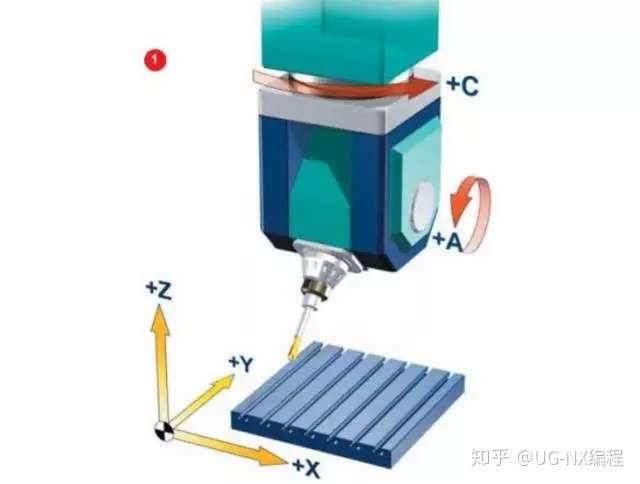
In the mechanical design of the 5-axis machining center, machine tool manufacturers are constantly working to develop new motion modes to meet various requirements. At present, all kinds of five axis machine tools on the market, although its mechanical structure in a variety of forms, but mainly in the following forms:
1. Two rotating coordinates directly control the direction of the tool axis (double swing head form).
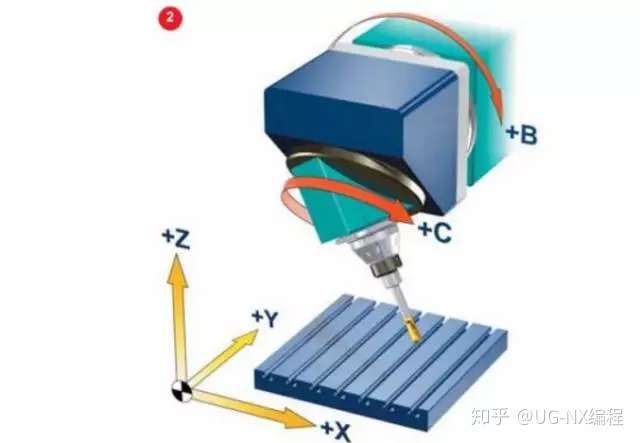
2. The two coordinate axes are at the top of the tool, but the rotation axis is not perpendicular to the linear axis (pendulum type).
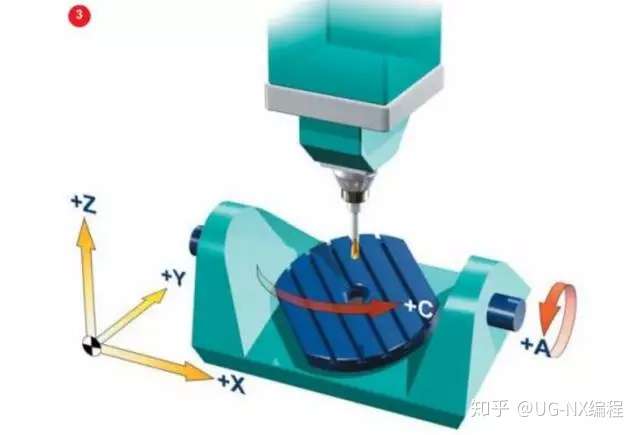
3. Two rotation coordinates directly control the rotation of the space (double turntable form).
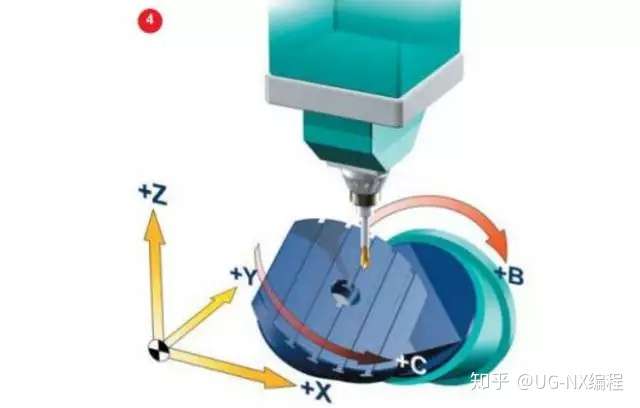
4. The two coordinate axes are on the workbench, but the rotation axis is not perpendicular to the linear axis (vertical workbench).
5. One of the two rotation coordinates acts on the tool and the other on the workpiece (one swing and one rotation form).
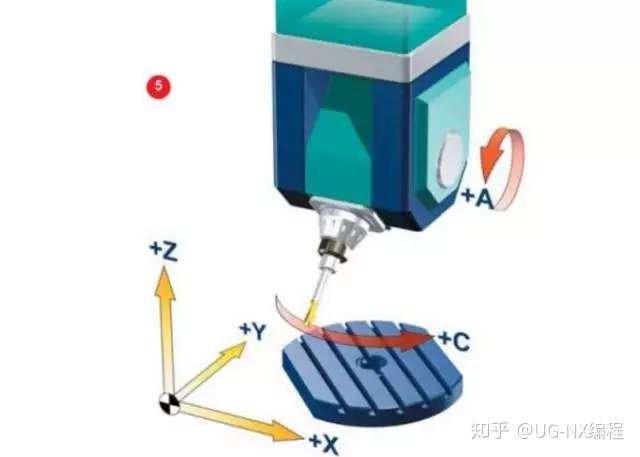
* Terminology: If the rotation axis is not perpendicular to the linear axis, it is considered a "vertical" axis.
Having seen the five-axis machine tools with these structures, I believe we should understand what the five-axis machine tools are moving and how they move. However, such a variety of machine structure, in the processing can show what characteristics? Compared with the traditional three axis machine, what are the advantages.
The many advantages of five-axis machining
Speaking of the characteristics of five-axis machine tools, it is necessary to compare with the traditional three-axis equipment. Production of three-axis processing equipment is more common, there are vertical, horizontal and gantry and other forms. Common processing methods are end milling cutter edge processing, side edge processing. Ball end knife copying processing and so on. But no matter what kind of form and method have a common feature, is in the process of tool axis direction always remain unchanged, the machine tool can only through the X, Y, Z three linear axis interpolation to achieve the movement of the tool in the space Cartesian coordinate system. Therefore, in the face of the following products, the three-axis machine tool efficiency is low, the processing surface quality is poor or even unable to process the drawbacks are exposed.
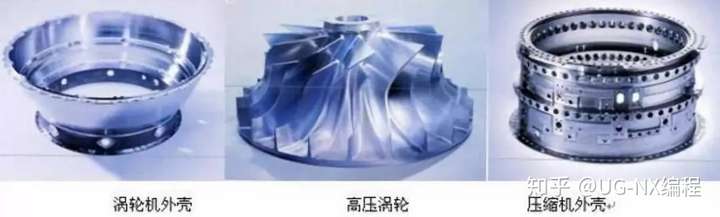
Compared with the three axis CNC machining equipment, five linkage CNC machine tools have the following advantages:
1. Maintain the best cutting tool state, improve cutting conditions
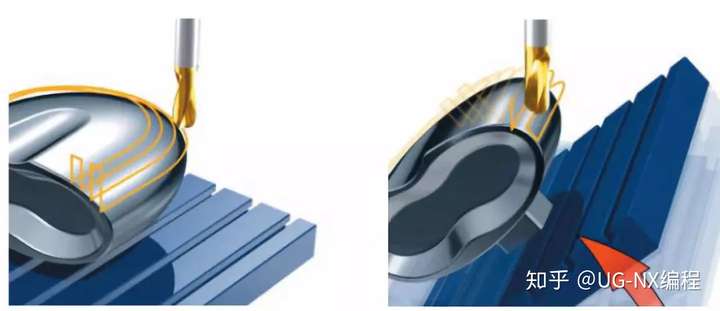
As shown in the figure above, in the three-axis cutting method in the left figure, when the cutting tool moves to the top or the edge of the workpiece, the cutting state gradually deteriorates. And to maintain the best cutting condition here, you need to rotate the table. And if we want to complete the processing of an irregular plane, it is necessary to rotate the table in different directions many times. It can be seen that the five-axis machine tool can also avoid the ball end milling cutter center point line speed of 0, to obtain a better surface quality.
2. Effectively avoid tool interference
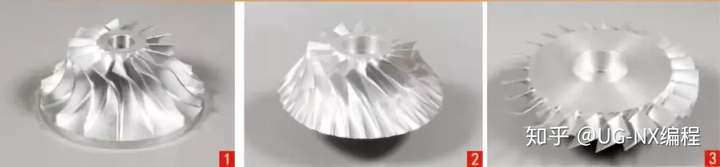
As shown in the above figure, the three-axis equipment cannot meet the process requirements due to interference for parts such as impellers, blades and integral bladed discs used in the aerospace field. The five-axis machine tool can be satisfied. At the same time, the five-axis machine tool can also use a shorter tool for processing, improve the rigidity of the system, reduce the number of tools, and avoid the generation of special tools. For our business owners, it means that in terms of tool costs, five-axis machine tools will save you money!
3. Reduce the number of clamping, one clamping to complete five-sided processing
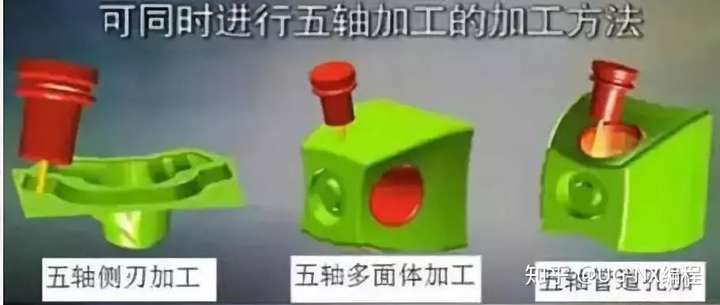
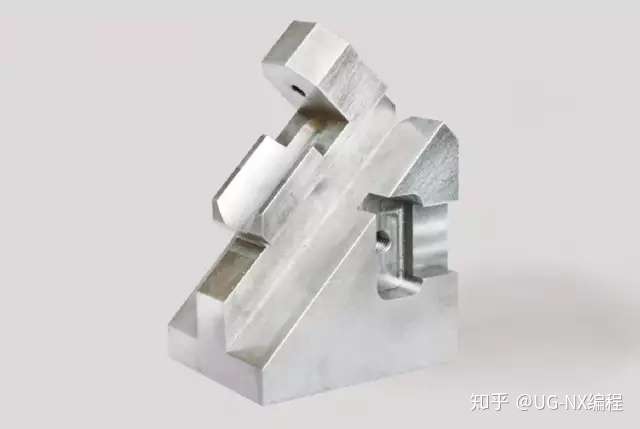
As can be seen in the figure above, the five-axis machining center can also reduce the benchmark conversion and improve the machining accuracy. In actual processing, only one clamping is required, and the processing accuracy is easier to be guaranteed. At the same time, due to the shortening of the process chain and the reduction of the number of equipment, the number of fixtures, workshop floor space and equipment maintenance costs are also reduced. This means that you can use fewer fixtures, less plant area and maintenance costs to complete more efficient and higher quality processing!
As shown in the figure, the five-axis machine tool can use the tool side edge cutting, and the processing efficiency is higher.
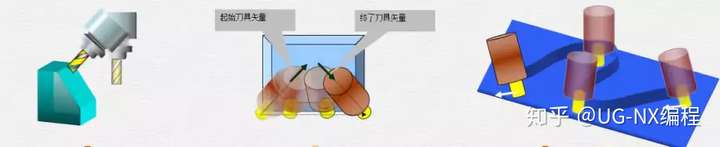
5. Shorten the production process chain and simplify production management
The complete machining of the five-axis CNC machine tool greatly shortens the production process chain, which can simplify production management and planning and scheduling. The more complex the workpiece, the more obvious its advantages over traditional decentralized production methods.
6. Shorten the new product development cycle
For enterprises in aerospace, automotive and other fields, some new product parts and molding molds have complex shapes and high precision requirements. Therefore, the five-axis CNC machining center with high flexibility, high precision, high integration and complete processing capability can well solve the problem of precision and cycle of complex parts processing in the process of new product development, greatly shorten the development cycle and improve the success rate of new products.
To sum up, the five-axis machine tool is too many advantages, but the five-axis machine tool attitude control, CNC system, CAM programming and post-processing are more complex than the three-axis machine tool! At the same time, when we talk about five-axis machine tools, we have to say true and false five-axis problem, we all know that the biggest difference between true and false five-axis RTCP function, but what is RTCP, how it is produced and how to apply it.
03 About RTCP
RTCP, in the high-end five-axis numerical control system, RTCP is considered to be the Rotated Tool Center Point, which is what we often call the knife point following function. In five-axis machining, when pursuing the trajectory of the tool point and the attitude between the tool and the workpiece, the additional motion of the tool point is generated due to the rotary motion. The control point of the numerical control system is often not coincident with the knife point, so the numerical control system should automatically correct the control point to ensure that the knife point moves according to the instruction set trajectory. This technology is also known in the industry as TCPM, TCPC or RPCP and other functions. In fact, the functional definitions of these names are similar to RTCP. Strictly speaking, RTCP function is used in the double swing head structure and is compensated by the rotation center point of the swing head. The function similar to RPCP is mainly applied to the machine tool in the form of double turntable to compensate for the change of linear axis coordinates caused by the rotation of the workpiece. In fact, these functions are the same, in order to keep the tool center point and the actual contact point between the tool and the workpiece surface unchanged. Therefore, for the convenience of expression, this paper unifies this kind of technology as RTCP technology.
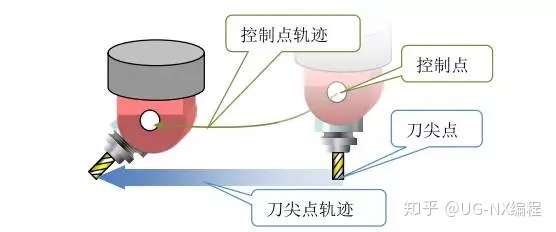
Many years ago, when five-axis machine tools were just popularized in the market, the concept of RTCP was hyped by machine tool manufacturers. At that time, the RTCP function was more like a gimmick for technology, and more people were enthusiastic and hyped about its technology itself. In fact, the function of RTCP is just the opposite. It is not only a good technology, but also a good technology that can bring benefits and create value for customers. For machine tools with RTCP technology (also known as true five-axis machine tools in China), the operator does not have to align the workpiece accurately with the axis of the turntable and clamp it casually. The machine tool automatically compensates for offset, greatly reducing auxiliary time and improving machining accuracy. At the same time, post-processing production is simple, as long as the output tool point coordinates and vectors on the line. As we said before, in terms of mechanical structure, five-axis CNC machine tools mainly have double swing heads, double turntables, one swing and one turn.
Below we will take the dual turntable high-end five-axis CNC system as an example to introduce the RTCP function in detail.
The concept of the fourth axis and the fifth axis is defined in the five-axis machine tool: in the structure of the double rotary table, the rotation of the fourth axis affects the attitude of the fifth axis, and the rotation of the fifth axis cannot affect the attitude of the fourth axis. The fifth axis is a rotational coordinate on the fourth axis.
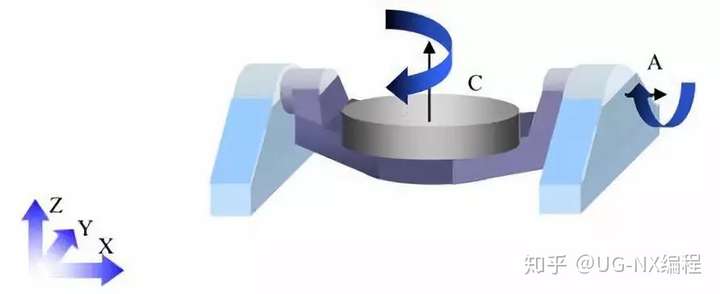
Well, after reading the definition instructions, let's explain. As shown in the above figure, the 4th axis of the machine tool is the axis and the 5th axis is the C axis. The workpiece is placed on the C- axis turntable. When the fourth axis A- axis rotates, the C- axis attitude is also affected because the C- axis is mounted on the-axis. Similarly, for the workpiece we put on the turntable, if we program the cutting tool center, the change of rotation coordinates will inevitably lead to the change of the X, Y and Z coordinates of the linear axis, resulting in a relative displacement. In order to eliminate this section of displacement, the machine is bound to compensate for it, RTCP is to eliminate the function of this compensation.
So how does the machine tool compensate for this offset? Next, we will analyze how this offset is generated.
According to the foregoing, we all know that the shift of the linear axis coordinates is caused by the change of the rotation coordinates. Then it is particularly important to analyze the rotation center of the rotation axis. For a machine tool with a double turntable structure, the control point of the C axis, that is, the 5th axis, is usually at the rotation center of the machine tool table. The fourth axis usually selects the midpoint of the fourth axis axis as the control point.
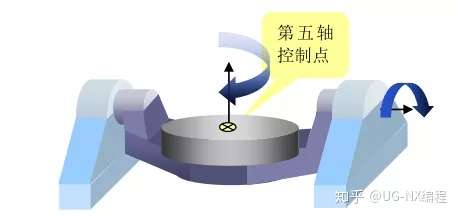
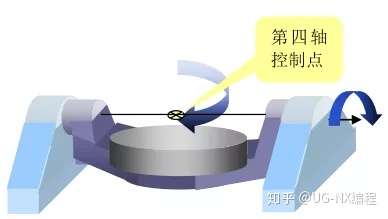
In order to realize the five-axis control, the numerical control system needs to know the relationship between the fifth axis control point and the fourth axis control point. That is, in the initial state (machine tool A, C axis 0 position), the position vector [U,V,W] of the fifth axis control point in the fourth axis rotating coordinate system with the fourth axis control point as the origin. At the same time, you also need to know the distance between the axis of A and C. For a double turntable machine, an example is shown in the figure below.
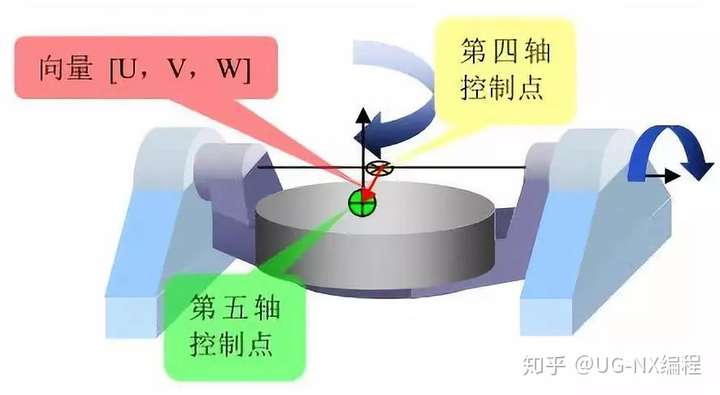
At this point, we can see that for the machine tool with RTCP function, the control system keeps the tool center always in the programmed position. In this case, the programming is independent and independent of the machine movement. When you program on a machine tool, you don't have to worry about machine tool motion and tool length, all you need to consider is the relative motion between the tool and the workpiece. The rest of the work control system will do for you. For example:
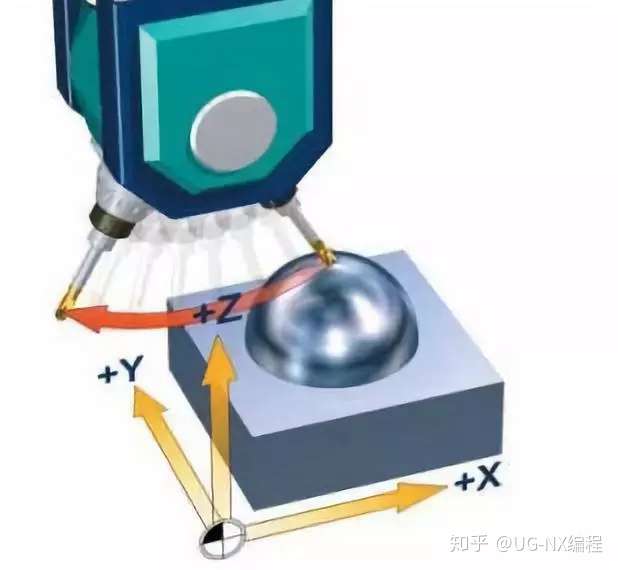
As shown above, the control system does not consider the tool length without RTCP function off. The tool rotates around the center of the shaft. The tip will move out of its position and will no longer be fixed.
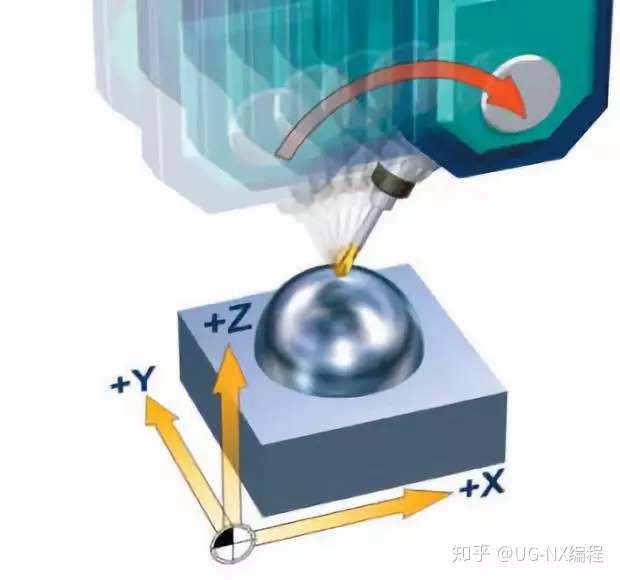
As shown in the above figure, with RTCP function on, the control system only changes the tool direction, and the tool tip position remains unchanged. The necessary compensating movements in the X,Y and Z axes are automatically calculated.
For five-axis machine tools and CNC systems that do not have RTCP, how to solve the problem of linear axis coordinate offset? We know that many domestic five-axis CNC machine tools and systems are false five-axis, the so-called false five-axis, in fact, refers to the machine tool without RTCP function. The true and false five-axis is neither to look at the appearance nor to see whether the five-axis is linked. It is necessary to know that the false five-axis can also be linked to the five-axis. The difference between the false five-axis is that it does not have a true five-axis RTCP algorithm, which means that the false five-axis programming needs to consider the length of the spindle and the position of the rotating table. This means that when programming with false five-axis CNC systems and machine tools, you must rely on CAM programming and post-processing technology to plan the tool path in advance.
For the same part, if the machine tool is changed or the tool is changed, CAM programming and post-processing must be carried out again. In addition, the fake five-axis machine tool needs to ensure that the workpiece is located at the rotation center of its worktable when clamping the workpiece. For the operator, this means that a large amount of clamping time is required and the accuracy is not guaranteed. Even do indexing processing, false five axis is also a lot of trouble. However, the true five-axis only needs to set up a coordinate system and only needs one tool setting to complete the processing.
The following figure takes the NX post-processing editor settings as an example to illustrate the coordinate transformation of the false five axes:
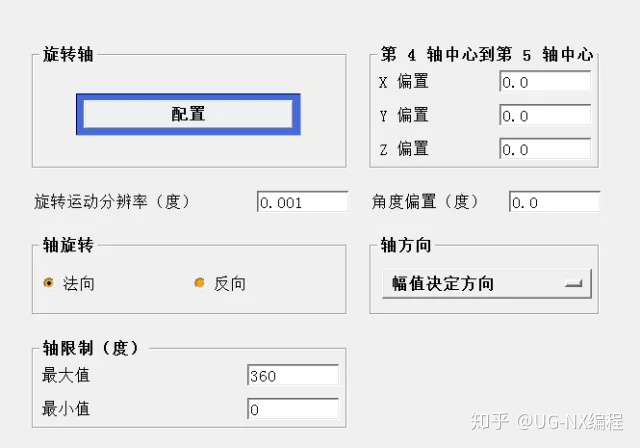
As shown in the above figure, the false five-axis is to rely on post-processing technology to show the position relationship between the center of the fourth axis and the fifth axis of the machine tool to compensate for the displacement of the rotation axis to the linear axis coordinates. The generated CNC program X, Y, Z is not only the programming point, but also contains the necessary compensation on the X, Y, Z axis. The result of this treatment will not only lead to insufficient machining accuracy, low efficiency, the generated program is not universal, and the labor cost is also high. At the same time, due to the different rotation parameters of each machine tool, there must be a corresponding post-processing file, which will cause great inconvenience to production. Moreover, the false five-axis generation program cannot be changed, and it is basically impossible to realize manual five-axis programming. At the same time, because there is no RTCP function, many five-axis advanced functions derived from it cannot be used, such as the five-axis tool compensation function. In fact, for a five-axis machine tool, it is just a tool for us to achieve the processing results, and there is no difference between true and false. The important thing is that our process determines the choice of processing methods, relatively speaking, the true five-axis machine tool is more cost-effective.
Related News
New Da'an

Follow us
Nanjing Arrow-Stone Industry Co. ,Ltd
Telephone: 86 025 84958290
Address: No. 105, Building 8, District 8, Lingxin Market, Jiangning District, Nanjing