


Towards intelligent machine tools
Release time:
2021-08-02
With the development of modern information technology, especially the new generation of artificial intelligence technology, intelligent machine tool technology has ushered in new development opportunities. Based on the three paradigms of intelligent manufacturing defined by the Chinese Academy of Engineering, this paper systematically expounds the concept, connotation, characteristics and architecture of intelligent machine tools. It reveals the three stages of machine tool evolution from manual machine tool to intelligent machine tool (CNC machine tool, Internet machine tool and intelligent machine tool), analyzes in detail the realization principles of four intelligent control of intelligent machine tool: autonomous perception and connection, autonomous learning and modeling, autonomous optimization and decision-making, and autonomous control and execution, and puts forward the essential characteristics of intelligent machine tool forming and accumulating knowledge through data learning, the original invention of the instruction domain analysis method, physics and big data hybrid modeling technology, I-code and dual-code joint control and other key enabling technologies. Based on the above research, the intelligent numerical control system and the industrial prototype of intelligent machine tool are developed. Through the practice of three intelligent technology application cases: processing quality optimization based on Cyber NC and dual-code joint control, process parameter optimization based on big data modeling, and machine tool feed system modeling and error compensation based on deep learning, the deep integration of a new generation of artificial intelligence technology and manufacturing technology is verified, which is a convenient and effective way for machine tools to evolve from "Internet machine tools" to "intelligent machine tools.

1. Introduction
The core technology of the new round of industrial revolution is intelligent manufacturing-digital, networked and intelligent manufacturing. As the main direction of high-quality development of American industrial Internet, German industrial 4.0 and China's manufacturing industry, intelligent manufacturing deeply integrates advanced information technology (especially the new generation of artificial intelligence technology) and manufacturing technology to promote a new round of industrial revolution [1].
Machine tool is the "industrial mother machine" of manufacturing industry, and its intelligent degree has an important influence on the implementation of intelligent manufacturing. Accelerating machine tools to move towards intelligence and improving the level of intelligence of machine tools is not only the urgent need for transformation and upgrading faced by the machine tool industry, but also the key and foundation for building a manufacturing power [2].
At the end of 2017, the Chinese Academy of Engineering proposed three basic paradigms of intelligent manufacturing [1]: digital manufacturing, digital networked manufacturing, and digital networked intelligent manufacturing-a new generation of intelligent manufacturing, which unifies the thinking and points out the development of intelligent manufacturing. The direction.
According to the three paradigms of intelligent manufacturing and the development process of machine tools, the evolution of machine tools from traditional manually operated machine tools to intelligent machine tools can also be divided into three stages: digital machine tools (numerical control machine tool,NCMT), namely numerical control machine tools; Internet numerical control machine tools (SMT), namely Internet machine tools; A new generation of artificial intelligence Internet numerical control machine tools, namely intelligent machine tools (intelligent machine tool,IMT).
The first stage is CNC machine tools. Its main feature is: between the man and the manual machine tool to increase the numerical control system, people's physical labor by the numerical control system to complete.
The second stage is the Internet machine tool. Its main feature is the integration of information technology such as networking and CNC machine tools, giving machine tools the ability to perceive and connect, and part of the human perception ability and part of the knowledge-based mental work is completed by the CNC system.
The third stage is the intelligent machine tool. Its main features are: a new generation of artificial intelligence technology into CNC machine tools, giving machine tools the ability to learn, can generate and accumulate knowledge. People's knowledge learning mental work by the numerical control system to complete.
Based on the analysis of the development of machine tools, the research contents proposed in this paper are as follows: Part 2 introduces in detail the evolution process from machine tools to intelligent machine tools; Part 3 focuses on the control principle (including key enabling technologies), main characteristics and four functional characteristics of intelligent machine tools; Part 4 specifically describes the practice of intelligent numerical control system and intelligent machine tool industrial prototype, and through intelligent technology application cases, verified the feasibility and effectiveness of intelligent machine tools and intelligent technology; Part 5 summarizes the full text.
2. The evolution of machine tools to intelligent machine tools
Manual machine tool (manually operated machine tool,MOMT) is the initial form of machine tools, it is the integration of human and machine physical systems. The operator through the human brain perception and decision-making, with both hands to control the machine tool, complete parts processing. The processing process of manual machine tools is completely completed by people to perceive, analyze, make decisions and operate control, which constitutes a typical "human-physical systems" (HPS)[1]. An abstract description of the control principle of a manual machine tool is shown in Figure 1.
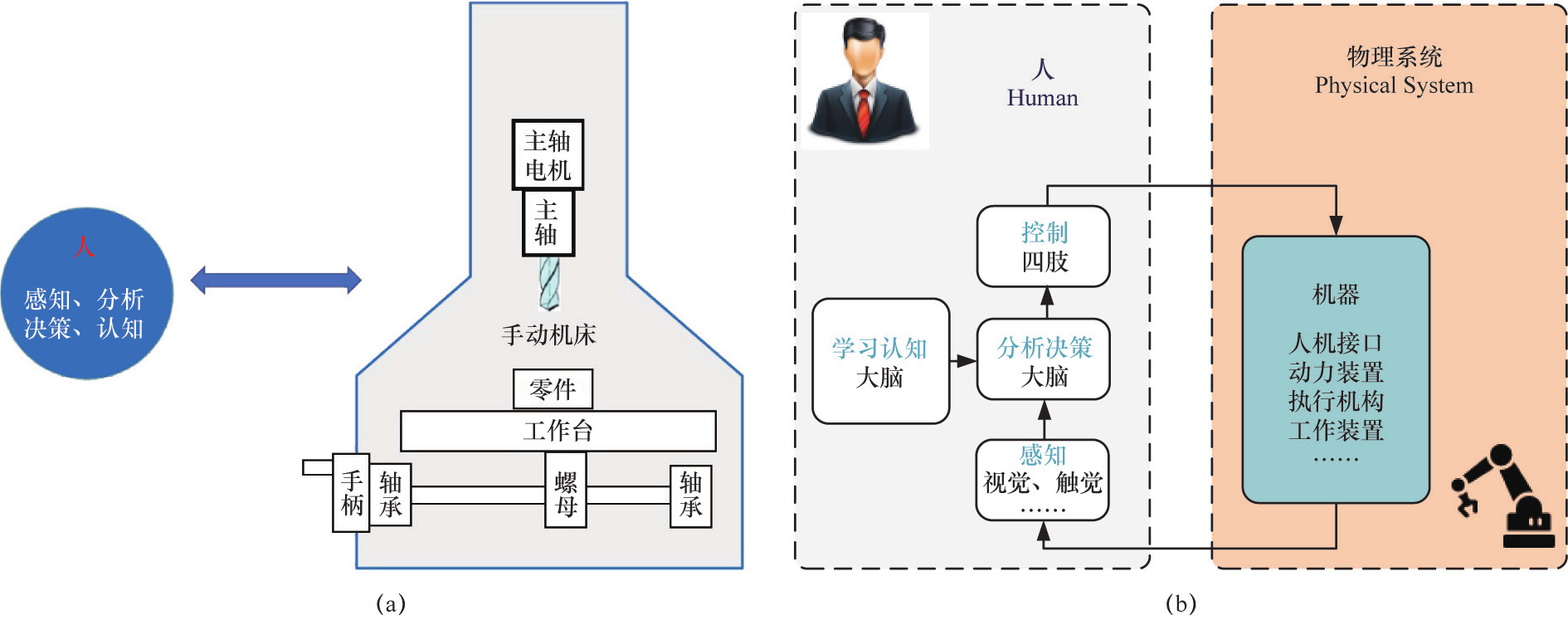
Figure 1.(a) Manual machine tool control principle; (B) Manual machine tool constitutes the "man-machine system" (HPS)[1].
The development of machine tools from manual machine tools to intelligent machine tools can be divided into three stages: CNC machine tools, Internet machine tools and intelligent machine tools.
2.1. CNC machine tools
With the development of digital control technology, manual machine tools have developed into CNC machine tools. By adding a numerical control system between the person and the machine tool, the processing information is input into the numerical control system through the G code, and the numerical control system replaces the person to control the machine tool to realize the motion control of the machine tool.
CNC machine tools are "human-information-machine system" (human-cyber-physical systems,HCPS)[1], that is, an information system (cyber system) is added between "human" (human) and "machine" (physical). An abstract description of the control principle of a CNC machine tool is shown in Figure 2.

Figure 2.(a) CNC machine tool control principle; (B) CNC machine tool "human-information-machine system" (HCPS)[1].
Compared with manual machine tools, the essential change of CNC machine tools is that the numerical control system is added between the human and the physical entity of the machine tool. CNC system plays an important role in the machining process of machine tools. The numerical control system replaces human manual labor and controls the machine tool to complete the processing task.
However, because CNC machine tools only realize the trajectory control of tools and workpieces through G code, they lack the ability to sense, feedback and learn and model the actual processing state of the machine tool (such as cutting force, inertial force, friction force, vibration, cutting force, thermal deformation, environmental changes, etc.), resulting in problems such as the actual path may deviate from the theoretical path, affecting the processing accuracy, surface quality and production efficiency. Therefore, the intelligent degree of traditional CNC machine tools is not high.
2.2. Internet machine tool
In recent years, with the continuous advancement of "Internet" technology and the integration and development of the Internet and CNC machine tools [3,4], the Internet, Internet of Things, and intelligent sensing technology have begun to be applied to the remote service, condition monitoring, and fault diagnosis of CNC machine tools., Maintenance and management, etc., domestic and foreign machine tool companies have carried out certain research and practice [5,6]. Mazak Company, Okuma Company, DMG-MORI Company, FANUC Company and Shenyang Machine Tool Co., Ltd. have launched their own Internet machine tools [7].
"Internet sensor" is a typical feature of Internet machine tools. It mainly solves the problem that the perception ability of CNC machine tools is not enough and the information is difficult to connect and communicate.
Compared with CNC machine tools, Internet machine tools add sensors to enhance the ability to perceive the processing state; the application of industrial Internet for equipment connection and interoperability, to achieve the collection and convergence of machine tool state data; analysis and processing of the collected data, to achieve real-time or non-real-time feedback control of the machine tool processing process. An abstract description of the Internet machine tool control principle is shown in Figure 3.

Figure 3.(a) Internet machine tool control principle; (B) digital networked manufacturing system "human-information-machine system" [1].
Internet machine tools have a certain level of intelligence, mainly reflected in:
(1) Network technology and CNC machine tools continue to integrate. In 2006, the American Association of Machine Manufacturing Technology (AMT) proposed a MT-Connect protocol for the interconnection of machine tool equipment [8,9]. In 2018, the German Association of Machine Tool Manufacturers (VDW) developed the German version of the Umati communication protocol for CNC machine tools based on the information model of the communication specification OPC Unified Architecture (UA) [10]. Huazhong CNC United domestic CNC system enterprises, put forward the CNC machine tool interconnection communication protocol NC-Link, to achieve the manufacturing process process parameters, equipment status, business processes, cross-media information and manufacturing process information flow transmission.
(2) The manufacturing system began to develop into a platform. Foreign companies have launched big data processing technology platform. GE launched Predix [11], an industrial Internet platform for the manufacturing industry, and Siemens released an open industrial cloud platform Mindsphere [12]; Huazhong CNC took the lead in launching a cloud service platform for CNC systems, providing standardized development and process module integration methods for the secondary development of CNC systems. At present, these platforms mainly stay in the industrial Internet, big data, cloud computing technology, with the development of intelligent technology, it shows the potential and trend of application to intelligent machine tools.
(3) The intelligent function is initially presented. Abroad, in 2006, Japan Mazak Company exhibited CNC machine tools with four intelligent functions, including active vibration control, intelligent thermal barrier, intelligent safety barrier and voice prompt. DMG MORI Corporation launched the CELOS application extension open environment. FANUC has developed intelligent machine tool control technologies such as intelligent adaptive control, intelligent load meter, intelligent spindle acceleration and deceleration, and intelligent thermal control. Heidenhain company's TNC640 CNC system has high-speed contour milling, dynamic monitoring, dynamic high-precision and other intelligent functions. The domestic Huazhong CNC HNC-8 CNC system integrates intelligent functions such as process parameter optimization, error compensation, cutting tool monitoring, and machine tool health protection.
Although the "Internet machine tool" has been developed for more than ten years and has achieved certain research and practical results, so far, it has only achieved some simple perception, analysis, feedback, and control, which is far from reaching the level of replacing human mental work. Due to relying too much on human experts for theoretical modeling and data analysis, machine tools lack real intelligence, resulting in difficult and slow accumulation of knowledge, and insufficient adaptability and effectiveness of technology. The fundamental reason is that the machine's ability to learn independently and generate knowledge has not yet made a substantial breakthrough.
2.3. Intelligent machine tool
Since the new century, mobile Internet, big data, cloud computing, Internet of things and other new generation of information technology with each passing day, rapid development, forming a group leap. These technological advances are concentrated on the strategic breakthroughs of the new generation of artificial intelligence technology, and their essential feature is the ability to generate, accumulate and apply knowledge.
The new generation of intelligent manufacturing technology formed by the deep integration of the new generation of artificial intelligence and advanced manufacturing technology has become the core driving force of the new round of industrial revolution, and also provides a major opportunity for the development of machine tools to intelligent machine tools and the realization of true intelligence.
Intelligent machine tool is a machine tool based on the new generation of information technology, which applies the new generation of artificial intelligence technology and advanced manufacturing technology. It uses autonomous perception and connection to obtain information related to machine tools, processing, working conditions and environment, generates knowledge through autonomous learning and modeling, and can apply these knowledge for autonomous optimization and decision-making to complete autonomous control and execution, to achieve high-quality, efficient, safe, reliable and low-consumption multi-objective optimization of the manufacturing process.

Figure 4. Smart machine definition.
Using a new generation of artificial intelligence technology to endow machine tool knowledge learning, accumulation and application capabilities, the relationship between people and machine tools has undergone fundamental changes, and the fundamental transformation from "teaching them to fish" to "teaching them to fish" has been realized [1].
3. Intelligent machine tools based on a new generation of artificial intelligence
3.1. The control principle of intelligent machine tools.
According to the definition of intelligent machine tool in Section 2.3, this paper proposes the principles and implementation schemes of intelligent machine tool autonomous perception and connection, autonomous learning and modeling, autonomous optimization and decision-making, and autonomous control and execution, as shown in Figure 5.

Figure 5. Intelligent machine control principle.
3.1.1. Autonomous perception and connection
The numerical control system is composed of numerical control device, servo drive, servo motor and other components. It is the core control unit of the machine tool to automatically complete the cutting and other tasks. During the operation of CNC machine tools, a large number of original electronic control data composed of command control signals and feedback signals will be generated inside the CNC system. These internal electronic control data are real-time, quantitative and accurate descriptions of the working tasks (or working conditions) and operating states of the machine tools. Therefore, the numerical control system is both an actuator in the physical space and a perceptron in the information space.
The internal electronic control data of the numerical control system is the main source of data perception. It includes the internal electronic control real-time data of the machine tool, such as the real-time data of part processing G code interpolation (interpolation position, position following error, feed speed, etc.), servo and motor feedback Internal electronic control data (spindle power, spindle current, feed shaft current, etc.), as shown in Figure 5. Through the automatic convergence of the internal electronic control of the numerical control system and the data collected from external sensors (such as temperature, vibration and vision, etc.), as well as the processing process data extracted from the G code (such as cutting width, cutting depth, material removal rate, etc.), the independent perception of CNC machine tools is realized.
The autonomous perception of intelligent machine tools can establish the correlation between working conditions and state data through "command domain oscilloscope" and "command domain analysis method" [3]. Using the "instruction domain" big data aggregation method to collect processing process data, through the NC-Link to achieve the interconnection of machine tools and the convergence of big data, the formation of machine tool life cycle big data.
3.1.2. Autonomous Learning and Modeling
The main purpose of autonomous learning and modeling is to generate knowledge through learning. The knowledge of CNC machining is the law of input and response of machine tools in machining practice. The model and the parameters in the model are the carrier of knowledge, and the generation of knowledge is the process of establishing the model and determining the parameters in the model. Based on the data obtained by autonomous perception and connection, the new generation of artificial intelligence algorithm library integrated in the big data platform is used to generate knowledge through learning.
In autonomous learning and modeling, there are three methods of knowledge generation: theoretical modeling of machine tool input/response causality based on physical models.
Autonomous learning and modeling can be established including machine tool spatial structure model, machine tool kinematics model, machine tool geometric error model, thermal error model, CNC processing control model, machine tool process system model, machine tool dynamics model, etc., these models can also be shared with other machine tools of the same model. The model constitutes a machine tool digital twin, as shown in Figure 5.
3.1.3. Autonomous optimization and decision-making
The premise of decision-making is accurate prediction. When the machine tool receives a new machining task, the machine tool model is used to predict the response of the machine tool. Based on the prediction results, multi-objective iterative optimization such as quality improvement, process optimization, health protection and production management is carried out to form the optimal processing decision, and the intelligent control I code containing optimization and decision information is generated for processing optimization. Autonomous optimization and decision-making is the process of using models to make predictions, then optimizing decisions and generating I-code.
I code is an important means to realize the independent optimization and decision-making of CNC machine tools. Unlike the traditional G-code, the I-code is the intelligent control code for multi-objective optimization processing corresponding to the instruction domain, which is an accurate description of the multi-objective optimization control strategy of a specific machine tool, such as motion planning, dynamic accuracy, processing technology, tool management, etc., and evolves with the change of the state of manufacturing resources. The detailed principle and description of the I-code can be found in the relevant patent [13].
3.1.4. Autonomous Control and Execution
Using the dual-code joint control technology, I .e. the synchronous execution of G code (first code) based on traditional numerical control machining geometric trajectory control and intelligent control I code (second code) containing multi-objective machining optimization decision information, the dual-code joint control of G code and I code is realized, so that the intelligent machine tool can achieve high quality, high efficiency, reliability, safety and low consumption numerical control machining, as shown in fig. 5.
3.2. The characteristics of intelligent machine tools
Compared with CNC machine tools and Internet machine tools, intelligent machine tools are very different in terms of hardware, software, interaction, control instructions, knowledge acquisition, etc., as shown in Table 1.
Table 1 CNC machine tools, Internet machine tools and intelligent machine tools

3.3. The main intelligent functional characteristics of intelligent machine tools
The functions of different intelligent machine tools are very different, but the pursuit of the goal is the same: high precision, high efficiency, safety and reliability, low consumption. The intelligent function of the machine tool also revolves around the above four goals, which can be divided into four categories: quality improvement, process optimization, health protection, and production management.
(1) Quality improvement: improve machining accuracy and surface quality. Improving machining accuracy is the primary driving force for the development of machine tools. To this end, the intelligent machine tool should have the function of processing quality assurance and promotion, which can include: machine tool space geometric error compensation, thermal error compensation, motion trajectory dynamic error prediction and compensation, double-code joint control surface high-precision machining, precision/surface smooth priority numerical control system parameter optimization and other functions.
(2) Process optimization: improve processing efficiency. Process optimization is mainly based on the machine's own physical properties and cutting dynamic characteristics of adaptive adjustment of processing parameters (such as feed rate optimization, spindle speed optimization, etc.) to achieve specific purposes, such as quality priority, efficiency priority and machine protection. Its specific functions may include: self-learning/self-growing process database, process system response modeling, intelligent process response prediction, process parameter evaluation and optimization based on cutting load, automatic detection and adaptive control of processing vibration, etc.
(3) Health protection: to ensure that the equipment is in good condition and safe. Machine tool health protection mainly solves the problem of life prediction and health management of machine tools, with the aim of realizing the efficient and reliable operation of machine tools. The intelligent machine tool has overall and component-level health status indicators, as well as a health protection function development toolbox. Its specific functions can include: spindle/feed axis intelligent maintenance, machine tool health status detection and predictive maintenance, machine tool reliability statistical evaluation and prediction, maintenance knowledge sharing and self-learning.
(4) Production management: improve the efficiency of management and operation. The intelligent function of production management mainly realizes the optimization of machine tool processing process and the low consumption (time and resources) of the whole manufacturing process. The intelligent functions of production management of intelligent machine tools are mainly divided into machine tool condition monitoring, intelligent production management and machine tool control. Its specific functions can include: intelligent judgment of processing state (knife breaking, chip winding), intelligent detection of tool wear/breakage, intelligent management of tool life, intelligent management of tool/fixture and workpiece identity ID and state, low-carbon intelligent control of auxiliary devices, etc.
4. Engineering practice of intelligent numerical control system and intelligent machine tool
According to the ternary mode of HCPS [14], in the production practice of CNC machine tools, the machine tool is the main body, the CNC system is the dominant, and the person is the master. From manual machine tools to CNC machine tools to intelligent machine tools, the biggest change is the role of the CNC system continues to increase. The degree of intelligence of the machine tool depends mainly on the intelligent degree of its dominant CNC system. Intelligent machine tools need to be equipped with the corresponding intelligent numerical control system (intelligent numerical controller, INC).
4.1. Intelligent CNC system
In this paper, an intelligent numerical control system engineering prototype-Huazhong 9 INC, its design and platform architecture is shown in Figure 6. In INC, the numerical control device, servo drive, motor and other auxiliary devices form a LocalNC. It is the local part of the numerical control machine tool and completes the real-time control of the numerical control machine tool.

Figure 6. INC architecture.
In addition to realizing all the functions of the traditional CNC system, INC should also have the most basic sensing ability required for intelligence, and can realize the real-time acquisition and transmission of command data, response data and necessary external sensor data (such as temperature, vibration, video signal, etc.) in the control process.
INC realizes the perception of multi-source data such as servo drive, intelligent module and external sensor through NCUC2.0 bus. Use NC-Link to connect with CNC machine tools, industrial robots, AGV cars, intelligent modules and other equipment to obtain big data and store it in the INC-Cloud cloud platform.
In INC, the establishment of a physical machine tool response model constitutes a digital twin, and the realization of intelligent functions is its main feature. In the architecture of INC, we establish digital twin models Cyber MT and Cyber NC corresponding to physical machine tools and numerical control systems, which can simulate the operation principles and response laws of real-world Physical MT and Local NC in virtual space. As a combination of Physical and Cyber, INC includes not only traditional NC physical entities, but also Cyber NC and Cyber MT, which are the key to INC's intelligence.
4.2. Intelligent machine tool prototype
Based on INC intelligent numerical control system, with S5H precision machining machine, BL5-C lathe and BM8-H milling machine as the main body, the industrial prototype of three intelligent machine tools is developed, as shown in Figure 7, respectively, from three aspects to verify the intelligent enabling technology proposed in this paper.

Figure 7. INC-based intelligent machine tool prototype. (a)S5H precision machining machine; (B) BL5-C intelligent lathe;(c)BM8-H intelligent milling machine.
The S5H precision machine tool adopts a marble bed, the machine tool adopts a gantry structure, each feed axis is driven by a linear motor, and a high-precision grating ruler is installed. Three independent temperature control systems are used to control the spindle, bed and coolant at constant temperature. 18 temperature sensors are installed on the spindle and the bed, and 3 vibration sensors are installed on the front end bearing of the spindle and the worktable. The positioning accuracy of the machine is <1 μm, and the repeated positioning accuracy is <0.5 μm. The S5H precision machining machine tool is used to verify the mold processing quality optimization technology based on Cyber NC and dual-code joint control.
BL5-C lathes are inclined bed structures, respectively, in the machine tool.XTo andZInstall a temperature sensor to the feed shaft (bearing seat, nut seat), spindle (bearing), bed and other important positions to detect the temperature change of the machine tool, and install a vibration sensor on the spindle (bearing) box to detect the vibration frequency.XTo andZThe grating ruler is installed to the feed shaft to achieve full closed-loop control. The positioning accuracy of the machine is <6 μm, the repeated positioning accuracy is <3 μm, and the roundness of the turning workpiece is <2 μm. The BL5-C lathe is used to verify the optimization technology of turning process parameters based on big data and deep learning.
A total of 9 temperature sensors are installed in the screw nut, bearing seat and motor seat of each feed shaft of the BM8-H milling machine, and 4 temperature sensors are installed in the spindle box, which are used to monitor the thermal deformation of the machine tool. A three-axis vibration sensor is installed on the spindle and the worktable, and a high-precision grating ruler is installed on each feed shaft to realize full closed-loop control. The positioning accuracy of the machine is <10 μm, and the repeated positioning accuracy is <8 μm. The BM8-H milling machine is used to verify the hybrid modeling and error compensation technology of machine tool feed system based on dynamics and deep learning.
4.3. The main intelligent application cases of intelligent machine tools
4.3.1. Mold processing quality optimization based on Cyber NC and dual-code joint control
This case is implemented on an S5H precision machine tool configured with INC, and a typical mold trial cutting Mercedes (Figure 8) is used as an example to verify the effect of DT and dual-code joint control technology on surface quality optimization for surface machining.

Figure 8. Mercedes test piece.
Based on the geometric and structural parameters of the S5H precision machine tool, the parameter-level digital twin Cyber NC of the numerical control device is established. The physical entity of the numerical control device and Cyber NC are completely equivalent at the interpolation level, and they are completely consistent with the interpolation instructions generated by the surface machining program.
Before the actual processing, the mold processing G code is simulated and optimized on Cyber NC. With the smooth interpolation trajectory and the horizontal consistency of the instruction feed speed as the optimization goal, the optimization iteration is carried out, the interpolation trajectory and speed planning instructions are continuously revised until the optimization goal is achieved, and the I-code instructions are generated according to the optimization results. In the actual processing, the G code and the I code containing the optimization result are executed simultaneously in the numerical control system, and the processing is completed by the dual-code joint control.
The effect before and after optimization is shown in Figure 9. Experiments show that the method based on twin model simulation and dual-code joint control can significantly improve the lateral consistency of the feed speed, thereby improving the machining quality of the part surface. After observation, the features of the optimized parts are clearer, the consistency is better, and the conformity with the original CAD model is higher [Figure 9 (B)].

Figure 9. Comparison of Mercedes specimen area A before and after optimization. (a) Feed rate chromatogram [15];(B) Machined surface quality.
4.3.2. Optimization of Turning Process Parameters Based on Big Data Learning
In CNC machining, the optimization of process parameters is very important, they affect the processing quality of parts, efficiency, machine tools and tools and other manufacturing resources life [16,17]. For the optimization of process parameters, many related studies have been carried out. One way is to optimize the process parameters through theoretical modeling of cutting forces, cutting stability, etc. during machine tool machining [18]. In addition to process parameter optimization based on theoretical analysis modeling, process parameter optimization methods based on big data models have also emerged in recent years [19,20].
This case is realized on the BL5-C intelligent lathe with INC, and the process system response model of the lathe is established by using the numerical control process data, and the feasibility and effectiveness of the method of learning, accumulation and application of the processing process knowledge based on big data are verified. The specific process is:
(1) The BP neural network is used as a model to describe the response law of the lathe process system, and the input of the model is five process parameters such as cutting depth, cutting radius and material removal, and the output is the main shaft power, as shown in Figure 10.

Figure 10. BP neural network model characterizing the spindle power response, a process parameter of a BL5-C lathe.
(2) Select the common parts of the actual production of this type of lathe for processing, and record the large data of the command field during processing. The steady-state data is separated from the spindle power data as the output training sample of the neural network. Through the command domain analysis method, the cutting parameters corresponding to the steady-state samples are extracted, including cutting depth, feed speed, material removal, spindle speed, gyration radius, etc., as the training samples of the neural network input. Constantly extracting steady-state samples to train the neural network model, and with the processing, the model gradually has the ability to predict the power of the machining spindle, that is, a model that simulates the power of the machine tool turning spindle is grown.
(3) The new processing parts (parts with different shapes and process parameters) are simulated, iterated and optimized in the model before the actual processing. For the parts shown in Table 2, the maximum allowable spindle power and power fluctuations are used as constraints to optimize the machining efficiency. The feed speed and spindle power curves before and after optimization are shown in Figure 11(a) and (B), respectively, and the processing time is shown in Table 2. The results show that the machining time after optimization is 27.8% shorter than that before optimization when the constraints are met.
Table 2 Optimized results

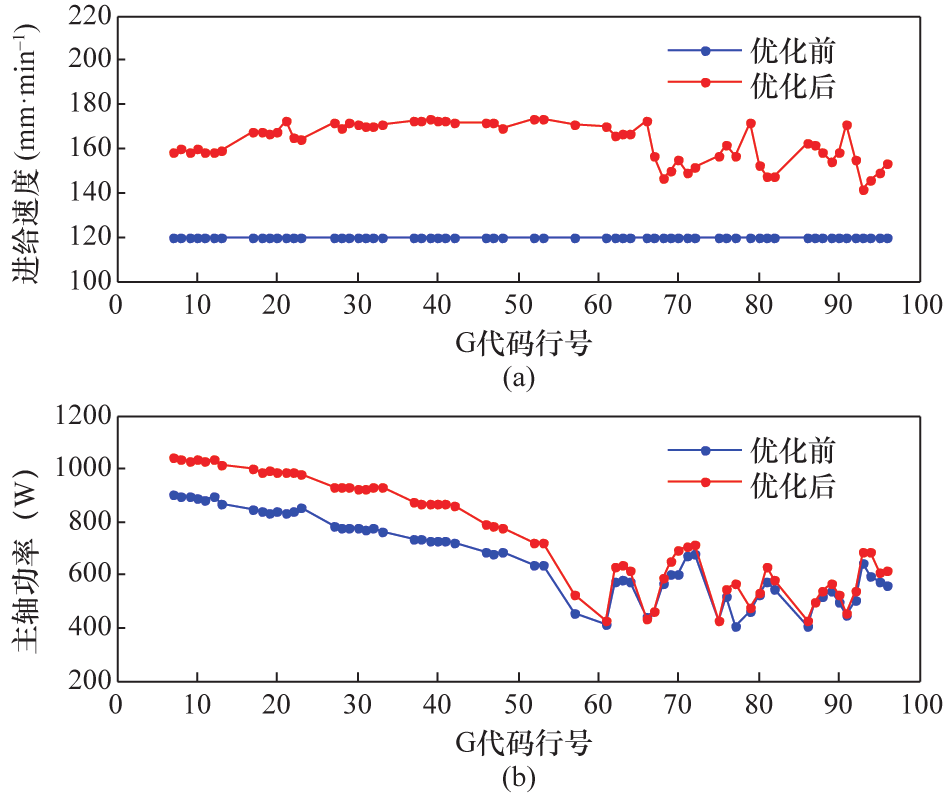
Figure 11. Results before and after optimization. (a) Feed speed; (B) Spindle power.
4.3.3. Hybrid modeling and error compensation of machine tool feed system based on dynamics and deep learning
The modeling of the machine tool feed system is the basis for achieving control strategy optimization, parameter setting and contour error pre-compensation, and improving the dynamic response performance of the feed system [21,22]. Based on theoretical analysis, Erkorkmaz and Altintas [23] established a feed system model to guide the design of high-speed feed system by mathematical and physical analysis of the feed system, and using the unbiased least squares method and friction model for dynamic parameter identification and friction characteristic analysis of the feed system. Unlike theoretical modeling methods, some scholars focus on data-driven modeling methods. Huo and Poo [24] proposed a linear autoregressive neural network modeling method to model the machine tool feed system. Using this model, the actual response position of the machine tool can be predicted by inputting the command position. Li et al. [25] proposed a data-driven modeling method based on a deep confidence network (DBN) to establish a reverse gap error prediction model.
This case is implemented on the BM8-H intelligent milling machine configured with INC, uses big data and multi-domain theoretical modeling to model the machine tool feed system, discusses the modeling method of the machine tool feed system and the feasibility of compensation implemented by the model simulation results. Its implementation steps are as follows:
(1) Taking the BM8-H intelligent milling machine as the experimental object, establishing itsXandYA multi-domain theoretical model of the shaft table. The model includes servo drives, servo motors and worktables and their mechanical transmission components. Among them, the model of servo drive and servo motor is modeled by its design parameters. The main parameters of the mechanical part model are shown in Table 3. In order to accurately identify these parameters, the application of sensitivity analysis to determine the order of identification, low sensitivity to give a default value, from high to low in order to identify the parameters. The theoretical distribution intervals of the parameters and the identification results are shown in Table 3.
Table 3 Identification parameters and their identification intervals

With radius of 50mm, feed speed of 3000 mm · min− 1The circular trajectory verifies the prediction accuracy of the model, and the results are shown in Figure 12 (B), with a maximum contour error of 10.07 µm.

Figure 12. (a) Circular contour instruction contour, actual contour, dynamic model simulation and hybrid model prediction contour; (B) Circular contour dynamic model simulation error (red), hybrid model prediction error (blue).
(2) In order to further improve the prediction accuracy, a hybrid model as shown in Figure 13 is designed. The model consists of a base model and a deviation model. The basic model is the multi-domain theoretical model obtained in step (1). The bias model is a 6-layer neural network model. The input end is the instruction sequence of the feed system and the simulation prediction sequence of the multi-domain theoretical model, and the output end is the sequence of the difference between the simulation prediction value and the measured value. FromX, axis table running various contour trajectories of the command data and measured encoder data to extract samples.X,YThe axis's respective deviation models are trained to obtain their respective deviation models.
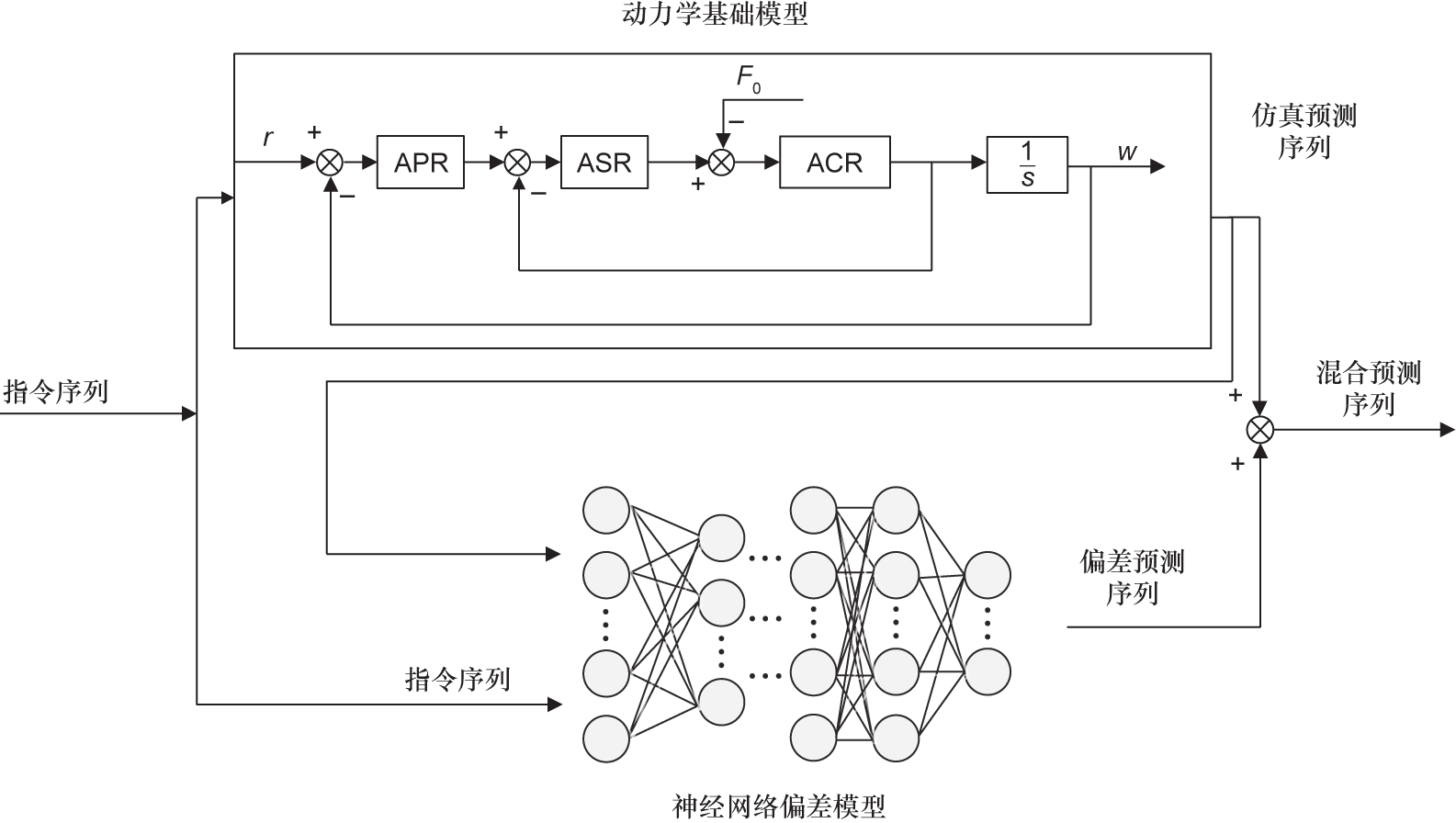
Figure 13. Schematic diagram of the hybrid model of the machine tool feed system.
Among them, the main modules of the basic model mainly include APR(automatic position regulator) position regulator, ASR(automatic speed regulator) speed regulator, ACR(automatic current regulator) current regulator, motor and mechanical transmission parts.rInput for system commands,wfor the actual output,F0is the disturbance input.
(3) The contour error prediction accuracy is shown in Figure 12 (B), and the maximum hybrid model prediction error is 3.21 µm. It can meet the prediction accuracy requirements required for medium precision machine tool compensation. According to the contour error of the predicted trajectory, the position of the circular trajectory is compensated, and the effect is shown in Figure 14. The contour error before compensation is about 12.53 µm, and the contour error after compensation is about 4.58 µm (63.4 reduction). The results show that the hybrid modeling method of the classical multi-domain modeling and the typical neural network model of artificial intelligence can improve the motion control accuracy of the machine tool feed system.

Figure 14.(a) Circle command contour, actual contour before compensation and actual contour after compensation; (B) Circle contour error (red) and contour error after compensation (blue).
5. Summary and Prospect
This paper explores the integration and application of a new generation of artificial intelligence technology in CNC machine tools, and analyzes the development trend of machine tools from CNC machine tools to "intelligent +" machine tools through "Internet +" machine tools. This paper studies the "empowerment" principle of using big data and artificial intelligence technology to realize autonomous perception and connection, autonomous learning and modeling, autonomous optimization and decision-making, and autonomous control and execution. It reveals that the essence of machine tool intelligence lies in that it can automatically generate knowledge, accumulate knowledge and use knowledge in the process of production and service to achieve the goal of high quality, high efficiency, reliability, safety and low consumption. In order to give intelligence to CNC machine tools, this paper proposes three intelligent enabling technologies: instruction domain analysis method, hybrid digital twin model and dual-code joint control, designs and develops the engineering prototype of INC CNC system, and develops three intelligent machine tools. Three application verifications were carried out on these three intelligent machine tools, and the results show that the three intelligent enabling technologies proposed in this paper have good feasibility and advancement. They can significantly improve the surface quality of curved surface processing (smooth transition at curved surface features), improve processing efficiency (27.8%), and reduce the contour error of the feed system (63.4%).
The current research work in this paper is a preliminary exploration of intelligent machine tools. The contents worthy of further in-depth study in the future include: the method of obtaining effective samples (positive samples and negative samples) suitable for machine learning modeling from the accumulated data of the processing process, the platform technology of sharing, sharing and co-intelligence of intelligent machine tools, and the application technology of artificial intelligence technology integrated with the needs of the machine tool industry in production practice.
Acknowledgements
Special thanks to Academician Zhou Ji of the Chinese Academy of Engineering for his guidance on this article. This paper was completed with the support of the National Natural Science Foundation of China (51675204 and 51575210) and the National Science and Technology Major Project 04 (2018ZX04035002-002).
Related News
New Da'an

Follow us
Nanjing Arrow-Stone Industry Co. ,Ltd
Telephone: 86 025 84958290
Address: No. 105, Building 8, District 8, Lingxin Market, Jiangning District, Nanjing